William Kelley Hampton Lewis County's Last Civil War Soldier
- Brenda Bear
- Apr 20
- 4 min read
Written by Brenda S. Bear (brendasbear@gmail.com). Please do not copy or share my writing without my permission. Thank you for reading my stories.
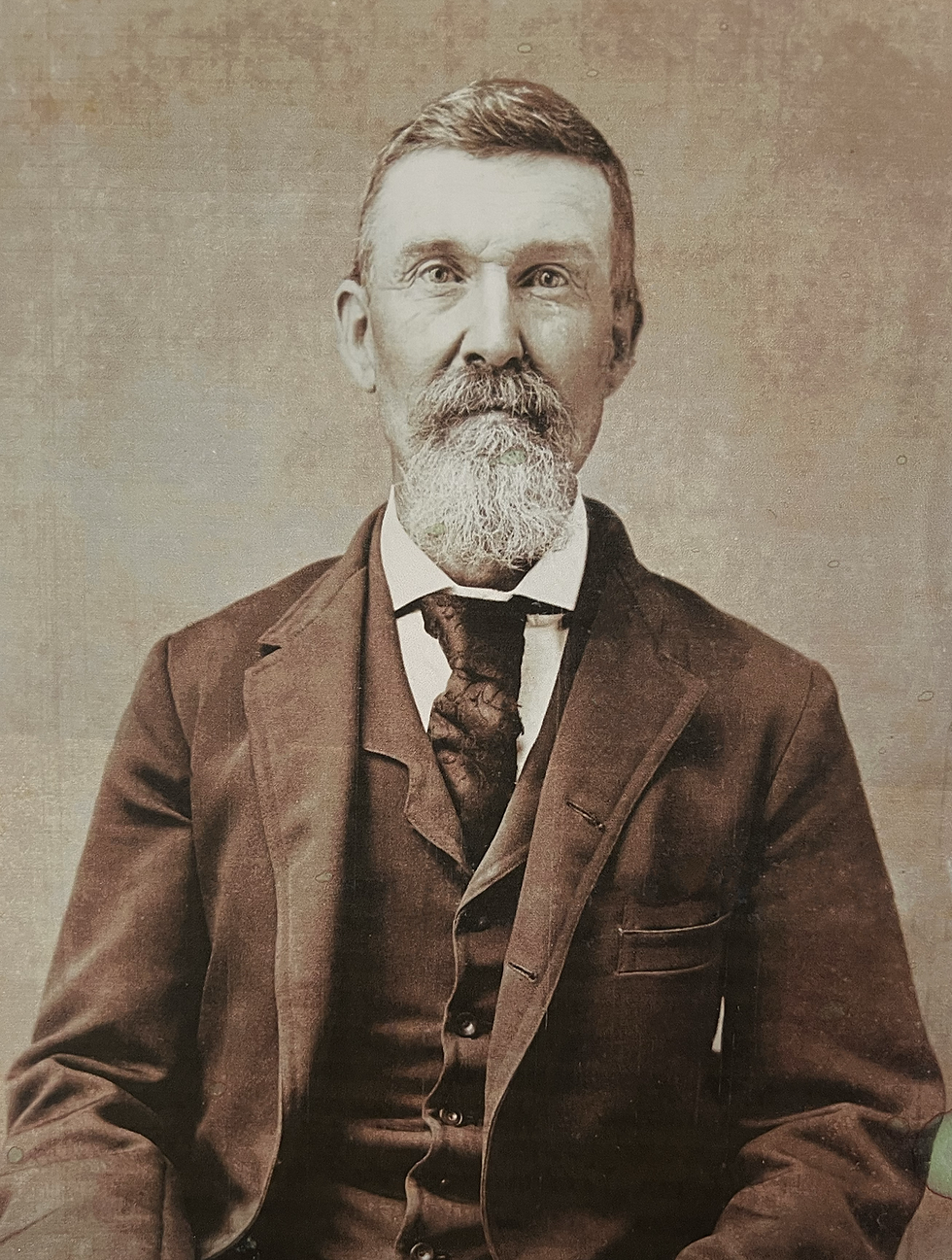
A few weeks ago, I had the pleasure of meeting Denise Kirk (“Kirkie”) Ash, who came to share stories of her ancestor, William Kelly Hampton, a man whose legacy has resonated deeply within her family for generations. Hampton was married to Margaret McCann, the first cousin of Kirkie’s great-grandmother, Hattie McCann Kirkendall. Hattie’s husband, Benjamin Garret Kirkendall and his three brothers were all Civil War combat veterans from Lewis County.
As a child, Kirkie vividly recalls listening to the older generation tell stories of the war, speaking of it as though it had happened only yesterday. Those memories continue to inspire her to this day.
Kirkie comes from a proud line of military service, and among them, William Kelly Hampton stands out as an especially remarkable figure. According to a 1938 edition of the Lewis County Herald, he was recognized as the last living Civil War veteran from Lewis County, Kentucky.
Born near Salem (Concord), Kentucky, in 1846, Hampton answered the call to serve in August 1864 at just eighteen years old. He traveled to Cincinnati and enlisted as a Private in the 5th Kentucky U.S. Cavalry. His service included several key battles of the Civil War, among them:
Winchester, Virginia
Woodstock, Virginia
Cedar Creek, Virginia
Five Forks, Virginia
Fishers Hill, Virginia
During the Shenandoah Campaign of 1864, Confederate General Jubal A. Early launched a surprise attack at dawn on October 19 along Cedar Creek near Strasburg, Virginia, catching Union General Philip H. Sheridan’s forces off guard and driving two Union corps into retreat. At the time, Sheridan was returning from Washington, D.C. and had spent the night in Winchester. Awakened the next morning by distant cannon fire, he rode swiftly toward the front, meeting his retreating troops along the way.
Arriving on the battlefield around 10:30 a.m., Sheridan’s presence and leadership rallied his men, transforming panic into resolve. By midafternoon, the Confederate forces were in full retreat. Among those who witnessed that dramatic turnaround was William Kelly Hampton, who later recounted his experience of that fateful day.
Later, Hampton was appointed an orderly to General Ulysses S. Grant, tasked with delivering critical dispatches during the Appomattox Campaign in the final week of the war. One such mission took place in April 1865 during the Battle of Sailor’s Creek, when a large portion of General Robert E. Lee’s Army of Northern Virginia was cut off and surrounded. Union forces under Generals Philip Sheridan, Andrew A. Humphreys, and Horatio Wright launched a coordinated assault on Confederate divisions, including those led by General Richard S. Ewell.
On April 5, Hampton delivered a crucial dispatch to General Ranald S. McKenzie, directing him to strike Ewell’s forces, a move that led to the capture of vital Confederate supplies. This dispatch proved instrumental in the broader coordination of Union attacks, aiding in Ewell’s capture and contributing to Lee’s surrender three days later.
Hampton was also present at Appomattox Court House on April 9, 1865, when General Robert E. Lee surrendered to Grant, effectively ending the war. He later recalled seeing Lee arrive in full dress uniform atop his horse, Traveller. Recognizing the significance of the moment, Hampton and fellow soldiers took branches from the tree where Lee tied his horse, a tree ultimately stripped bare. He also witnessed Lee handing over his sword to Grant, as he described in letters written later in life.
According to Mason County historian Ron Bailey, Robert E. Lee’s famous gray charger horse, Traveller has ties directly to Mason County. Bailey said Traveller was conceived in Maysville in 1856. His sire was Grey Eagle, a famous Kentucky racehorse. Grey Eagle was a standing stud on J.B. Poyntz’s farm. Grey Eagle was the “Pride of Kentucky” and won many stakes races in Kentucky.
Hampton participated in the Grand Review of the Armies in Washington, D.C. after the war’s end. He was furloughed in December 1865 and honorably discharged on August 17, 1867 in Jackson, Mississippi.
William Kelly Hampton’s roots in service ran deep. He was the grandson of Samuel Hampton, a staff officer under General George Washington during the Revolutionary War. His wife, Margaret Eliza McCann, whom he married in 1870 after riding horseback fifteen miles and crossing the Ohio River in a skiff to Manchester, Ohio, also came from a family of Civil War veterans. Together, William and Margaret were married for sixty-five years and had two children: Henry T. Hampton and Margaret Jane Willim.
After the war, Hampton continued to serve his community in many ways: as Justice of the Peace, sawmill operator at Poplar Flat, Postmaster at the Poplar Flat Post Office (1874–1886), and later as a Lewis County Magistrate.
William K. Hampton passed away in 1938 at the age of ninety-one. Both the Hampton and McCann families were of Scotch-Irish descent and among the early pioneers who migrated from Virginia to Kentucky in the early nineteenth century.
Thanks to Kirkie’s visit and the stories she so generously shared, the memory of William Kelly Hampton lives on, a testament to personal sacrifice, local heritage, and the enduring spirit of our community.


Comments